
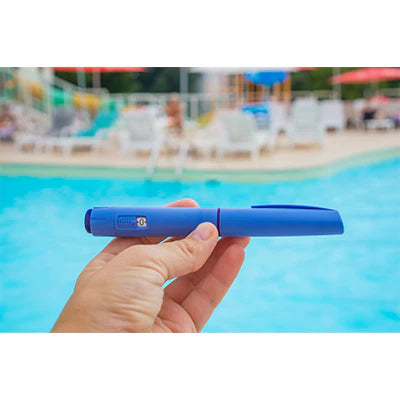
Summer is a great time to be active, travel, and enjoy the outdoors. If you use insulin, it's also the time of year when your medication is most at risk. Heat is insulin's biggest enemy -- and the temperatures that feel perfectly comfortable to you can silently degrade your insulin to the point where it no longer works the way it should.
This is not a theoretical risk. Insulin is a protein, and like all proteins, it breaks down when exposed to heat. Degraded insulin doesn't announce itself -- it looks exactly the same in the vial or pen. You inject it, your blood sugar doesn't respond the way it should, and you may not immediately connect the dots. Understanding exactly how heat affects insulin, and what to do about it, is one of the most practical things you can do to protect your diabetes management this summer.
How Heat Damages Insulin
Insulin's effectiveness depends on its molecular structure remaining intact. When insulin is exposed to temperatures above its safe range, the protein molecules begin to break down -- a process called denaturation. Denatured insulin loses its ability to bind effectively to insulin receptors, which means it can't lower blood sugar the way it should. The damage is cumulative and irreversible. You can't "fix" heat-damaged insulin by cooling it back down.
The heat damage threshold is lower than most people expect. At temperatures above 86 degrees Fahrenheit (30 degrees Celsius), insulin begins to degrade. In direct sunlight, a car interior can reach 120 to 150 degrees within minutes. A bag left on a beach towel in the sun, a pocket close to your body during intense exercise, or a glove compartment on a hot day can all expose insulin to temperatures well above the damage threshold without you realizing it.
Freezing is equally damaging. Insulin that has been frozen -- left in a car overnight in winter, packed in checked luggage in an aircraft hold, or placed at the back of a refrigerator shelf where it can freeze -- is also denatured and should be discarded. The risks go in both directions.
Insulin Storage Temperature Guidelines
Understanding the two categories of insulin storage -- refrigerated (unopened) and room temperature (in-use) -- is essential for managing insulin safely in summer.
Unopened insulin: refrigerated storage
Insulin that has not been opened should be stored in the refrigerator at 36 to 46 degrees Fahrenheit (2 to 8 degrees Celsius). This is the storage condition insulin manufacturers use to establish the expiration date printed on the packaging. Unopened insulin stored properly in the refrigerator is good until that printed expiration date.
A few refrigerator storage tips that many people overlook:
- Don't store insulin in the door of the refrigerator -- temperature fluctuates more there with frequent opening and closing. The middle shelf is most stable.
- Don't store insulin at the back of the refrigerator where it may accidentally freeze. Check that your refrigerator is not set too cold.
- Never use a refrigerator that has known temperature inconsistencies for insulin storage.
Opened/in-use insulin: room temperature storage
Once you open or remove insulin from the refrigerator for active use, most insulin types can be kept at room temperature -- but room temperature means a stable temperature below 77 to 86 degrees Fahrenheit (25 to 30 degrees Celsius), depending on the specific insulin. Check your insulin's package insert for the exact temperature limit, as this varies by brand and formulation.
At room temperature, opened insulin has a limited usable life -- typically 28 days for most vials and pens, though some formulations allow 42 to 56 days. Write the date you opened it on the vial or pen so you always know when to discard it. This timeline applies regardless of whether the insulin has been refrigerated again after opening.
The critical point for summer: "room temperature" does not mean the temperature inside a beach bag in the sun, a car parked in a parking lot, a gym bag in a hot car, or a pocket during intense outdoor exercise. It means a controlled, stable temperature within the safe range. In summer conditions, active insulin almost always needs additional protection.
How to Tell if Insulin Has Been Damaged by Heat
Visual inspection is the first line of defense -- though it's important to know that not all heat-damaged insulin shows visible changes. Signs that insulin may have been damaged include:
- Cloudiness in clear insulin: Rapid-acting and long-acting analog insulins (like Humalog, Novolog, Lantus, and Basaglar) should always be clear and colorless. Any cloudiness, clumping, or particles in a normally clear insulin is a sign of degradation -- discard it.
- Clumping or frosting in cloudy insulin: NPH insulin is normally cloudy but should mix to a uniform, milky appearance when rolled. Clumps, strings, or a frosted appearance indicate damage.
- Discoloration: Any yellowing or browning of insulin that is normally clear or white is a sign of degradation.
- Unexplained high blood sugar: If your blood sugar is consistently higher than expected and you haven't changed your diet, activity, or dose, and you've ruled out other causes, suspect compromised insulin -- especially if it has been exposed to heat recently.
When in doubt, discard it. The cost of a vial or pen of insulin is far less than the cost of the health consequences of using degraded insulin.
Summer Scenarios That Put Insulin at Risk
Understanding the specific situations where insulin is most commonly damaged in summer helps you stay ahead of the problem.
Cars and vehicles
This is the single most common cause of insulin heat damage in summer. Even on a mild 70-degree day, a car interior can reach over 100 degrees within 20 minutes. On a hot day, temperatures exceed 130 degrees. Never leave insulin in a parked car -- not in the glove compartment, not in the trunk, not on the seat. If you're driving, keep insulin in a cooling case in the main cabin with the air conditioning running, not in the back seat where temperatures can vary significantly.
Beach and pool days
Insulin left in a bag on a beach towel in direct sunlight can heat to dangerous temperatures within minutes. Carry insulin in a dedicated cooling pouch and keep it in the shade whenever possible. If you're swimming, don't leave insulin exposed -- store it in your bag in a shaded area or with a cooling pack.
Outdoor exercise and sports
Body heat during intense exercise, combined with summer temperatures, can raise the temperature of insulin stored in a pocket or pump reservoir. For insulin pump users, heat affects both the insulin in the reservoir and the pump's electronics. Keep the pump covered from direct sunlight and change the reservoir more frequently in hot weather, as insulin in the pump reservoir degrades faster at elevated temperatures.
Air travel
Aircraft cargo holds can experience extreme temperatures -- both very hot and very cold -- that will damage insulin. Always carry insulin in your carry-on luggage, never in checked bags. TSA allows medically necessary liquids including insulin in quantities exceeding the standard 3.4 oz limit -- keep insulin in original labeled packaging and declare it at the checkpoint if needed. Insulin cooling cases and gel packs are allowed through TSA security.
Power outages
Summer storms and heat waves can cause power outages that affect refrigerator temperatures. If your power goes out, a refrigerator that remains closed will typically maintain safe temperatures for 4 to 6 hours. Insulin that has been at room temperature (above 46 degrees Fahrenheit) for more than 28 days, or that has been exposed to temperatures above 86 degrees, should be assessed carefully before use. Have a plan for where to store insulin during extended power outages -- a neighbor's working refrigerator, a medical-grade cooler with ice packs, or a pharmacy that may be able to help.
GLP-1 Medications: The Same Rules Apply
If you use a GLP-1 receptor agonist like Ozempic, Wegovy, Mounjaro, or Zepbound alongside or instead of insulin, the same temperature rules apply. These injectable medications are also proteins that degrade in heat. Unopened pens should be refrigerated; in-use pens can be kept at room temperature for the duration specified on the package insert (typically 28 to 56 days depending on the medication). They need the same heat protection as insulin during summer activity and travel.
Practical Solutions: Keeping Insulin Cool This Summer
The good news is that keeping insulin safe in summer is straightforward with the right products. You don't need to limit your activities or carry a bulky cooler everywhere -- there are practical, portable solutions for every situation.
Evaporative cooling pouches
Evaporative cooling pouches work without electricity, refrigeration, or ice packs -- you activate them with tap water, and the evaporation process keeps the interior significantly cooler than the ambient temperature. They're compact, lightweight, and ideal for day trips, outdoor activities, and travel where carrying a cooler isn't practical.
The Medicool Poucho Single Pen Cooling Pouch uses Medicool's patented fabric technology to keep a single insulin pen cool using evaporation -- activated with tap water in just 40 seconds and effective for up to 4 days per activation. It can be re-activated hundreds of times, making it a cost-effective long-term solution for daily use. Available in single pen, duo-pen, small, and X-large sizes to accommodate different pen and vial configurations.
Gel pack travel organizers
For people who want to keep all their diabetic supplies organized and protected in one place, a travel organizer with an included gel pack offers convenience alongside temperature protection.
The Medicool Diabetic Travel Organizer organizes up to a week's worth of diabetic supplies -- insulin, syringes, pen needles, lancets, meter, and test strips -- in one compact water-resistant nylon case, with a refreezable gel pack included to keep insulin cool for hours. It's TSA-compliant and designed for exactly the kind of travel and day-trip situations where insulin is most at risk.
For longer trips or those who need to carry a two-week supply, the Medicool Dia-Pak Deluxe Organizer provides more storage space across multiple pockets and compartments while still including the gel pack for insulin cooling.
Everyday habits that protect insulin
Beyond dedicated cooling products, a few simple habits significantly reduce heat exposure risk:
- Never leave insulin in a parked car. Take it with you every time, without exception.
- Store in-use insulin in an insulated bag when outdoors. Even a basic insulated lunch bag provides meaningfully better protection than an open tote or pocket in direct sun.
- Keep insulin out of direct sunlight even when it's in a bag -- UV exposure adds heat exposure.
- Check the temperature, not just how you feel. A beach day that feels comfortable to you may still be hot enough to damage insulin left unprotected.
- Write the date on opened insulin and stick to the in-use time limit regardless of whether it's been re-refrigerated.
- Keep a backup supply at home in the refrigerator so a damaged vial or pen doesn't leave you without insulin.
Monitoring More Frequently in Summer
Even with careful storage practices, summer heat affects insulin absorption rates in ways that can shift your blood sugar patterns. Heat causes blood vessels near the skin to dilate, which speeds up insulin absorption from injection sites -- potentially causing faster and stronger action than you expect, increasing hypoglycemia risk. Dehydration, which is more common in summer, can cause blood sugar to become more concentrated, pushing levels up. And changes in activity, diet, and schedule during summer holidays all affect blood sugar management.
Monitoring more frequently in summer -- particularly before and after outdoor activities -- helps you catch unexpected highs and lows before they become serious. Having reliable supplies stocked and accessible means you're never caught unprepared. Consistent blood sugar monitoring with a reliable meter like the True Metrix Blood Glucose Meter and keeping True Metrix Pro Test Strips stocked gives you accurate readings when you need them. The Autolet Impression Lancing Device with its seven depth settings makes frequent testing more comfortable, and HTL-Strefa MedLance Plus Safety Lancets deliver an ultra-sharp, minimally painful stick every time.
For insulin injection, using quality supplies consistently matters year-round but is especially important in summer when you may be testing and injecting more frequently. The BD Veo Ultra-Fine Insulin Syringes feature a patented 5-bevel needle tip for comfortable injections, and the BD Nano 2nd Gen Pen Needles, the Advocate Short Pen Needles 31G x 5/16" and HTL-Strefa Droplet Pen Needles are reliable, comfortable options for insulin pen users.
What to Do if You Suspect Your Insulin Has Been Damaged
If you have any reason to believe your insulin has been exposed to temperatures above 86 degrees Fahrenheit for any significant period -- a car left in the sun, a forgotten bag on a beach, an extended power outage -- take these steps:
- Inspect it visually using the criteria above. Any cloudiness, clumping, discoloration, or particles in normally clear insulin means discard immediately.
- If it looks normal but you're unsure, monitor your blood sugar more closely than usual after your next injection and watch for unexplained highs.
- When in doubt, discard it. Using potentially damaged insulin is not worth the risk of uncontrolled blood sugar.
- Contact your pharmacy or healthcare provider if you need an emergency replacement -- many pharmacies can provide a replacement vial or pen with a valid prescription, and your diabetes care team can advise on next steps.
- Document the incident if you need to contact your insulin manufacturer -- some companies have replacement programs for insulin damaged by extreme temperature events like power outages.
Stock Up on Diabetic Supplies Before Summer Activities
The best time to make sure you have everything you need for safe summer insulin management is before a trip or activity -- not when you're already dealing with a problem. At Best Buy Medical Supplies, we carry everything you need: insulin cooling pouches, diabetic travel organizers, glucose meters and test strips, insulin syringes, pen needles, and lancets from trusted brands at competitive prices.
Browse our complete diabetic supplies collection and get your order in before your next summer adventure.
Disclaimer: This information is intended for educational purposes only and should not replace advice from your healthcare provider. Always consult your diabetes care team or pharmacist regarding insulin storage requirements for your specific insulin formulation, and contact them promptly if you suspect your insulin has been damaged.