
Kegel exercises are one of the most commonly recommended treatments for urinary incontinence -- and one of the most commonly done incorrectly. Studies suggest that up to 50% of people who try Kegel exercises without professional guidance are using the wrong muscles entirely. Done correctly and consistently, Kegels can meaningfully reduce leakage, urgency, and frequency. Done incorrectly, they can waste weeks of effort -- and in some cases, actually make things worse.
This guide covers everything you need to know: what Kegels actually do, how to find the right muscles, the correct technique for both slow and fast contractions, how much to do and when, who they help most, and -- importantly -- who they won't help and might even harm.
What Kegel Exercises Actually Do
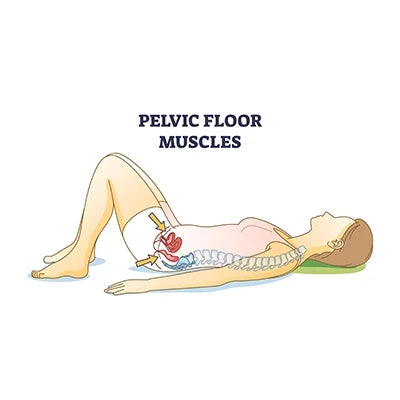
Kegel exercises -- named after Dr. Arnold Kegel, who developed them in the 1940s -- are contractions of the pelvic floor muscles. The pelvic floor is a hammock-shaped group of muscles that stretches from the pubic bone at the front to the tailbone at the back. These muscles support the bladder, bowel, and uterus (in women) and control the sphincters that hold urine and stool in place.
When these muscles are strong and coordinated, they contract quickly to prevent leakage when you cough, sneeze, laugh, or exercise (preventing stress incontinence), and they help suppress the urgent bladder contractions that cause you to rush to the bathroom (helping with urge incontinence). When they are weak, fatigued, or poorly coordinated, leakage occurs.
Kegel exercises strengthen these muscles through the same principle as any other strength training: repeated contractions build muscle tone, endurance, and coordination over time. The key word is time -- results typically take 6 to 12 weeks of consistent daily practice, and the exercises need to be maintained long-term to sustain the benefits.
Who Benefits from Kegel Exercises
Kegels are most effective for:
- Stress incontinence: Leakage triggered by physical activity -- coughing, sneezing, laughing, jumping, lifting. This is the type most directly caused by weak pelvic floor muscles, and Kegels address it most directly. Clinical evidence shows improvement in 50 to 80% of women with stress incontinence after a structured Kegel program.
- Urge incontinence: The sudden, intense need to urinate that can result in leakage before reaching the bathroom. Pelvic floor strength helps suppress involuntary bladder contractions. Kegels are typically combined with bladder training techniques for urge incontinence.
- Mixed incontinence: A combination of stress and urge incontinence -- the most common type in women over 50. Kegels address the stress component and support the bladder control strategies used for the urge component.
- Post-prostate surgery incontinence in men: Radical prostatectomy commonly causes stress incontinence. Pelvic floor training before and after surgery is one of the most evidence-based interventions for recovery of continence in men.
- Postpartum incontinence: Pregnancy and childbirth weaken the pelvic floor significantly. Kegels during and after pregnancy help restore muscle function and prevent long-term incontinence.
Who Should NOT Do Kegel Exercises -- or Should Do Them With Caution
This is the section most guides leave out -- and it's one of the most important. Not everyone with incontinence has a weak pelvic floor. Some people have a pelvic floor that is too tight (hypertonic), and for these people, Kegel exercises can make things significantly worse.
Hypertonic pelvic floor
A hypertonic pelvic floor is one where the muscles are chronically tense, overactive, or unable to fully relax. This can cause pelvic pain, painful intercourse, difficulty emptying the bladder completely, and paradoxically, incontinence -- because tense muscles can be weak muscles that lack the ability to contract effectively on demand.
Signs that your pelvic floor may be hypertonic rather than simply weak include: pelvic or perineal pain, pain with intercourse, difficulty inserting tampons, constipation or straining with bowel movements, a feeling of incomplete bladder emptying, or urgency that seems more like spasm than a sensation of fullness. If you have several of these alongside incontinence, mention them to your healthcare provider before starting Kegels. A pelvic floor physiotherapist can assess whether your muscles need strengthening, relaxation, or both.
Overflow incontinence
Overflow incontinence occurs when the bladder doesn't empty properly and overflows -- typically caused by an underactive bladder muscle or a blockage (such as an enlarged prostate in men). Kegels don't address this type of incontinence and won't help. If your leakage involves constant dribbling, a weak or interrupted urine stream, or a feeling that you never fully empty, overflow incontinence may be the cause. This requires medical assessment rather than exercise.
After recent surgery
People who have had recent pelvic surgery -- including hysterectomy, prostate surgery, or bladder repair -- should get clearance from their surgeon before starting Kegel exercises. Timing matters: starting too early can disrupt healing, but starting at the right time (often 4 to 6 weeks post-surgery for some procedures, sooner for others) significantly improves outcomes. Your surgeon or WOC nurse can advise on timing specific to your procedure.
Finding the Right Muscles: The Most Important Step
The single most common Kegel mistake is contracting the wrong muscles. Many people squeeze their buttocks, thighs, or abdomen instead of -- or in addition to -- their pelvic floor. Contracting the wrong muscles doesn't strengthen the pelvic floor and can actually increase intra-abdominal pressure, potentially making leakage worse.
For women: How to locate your pelvic floor muscles
The most reliable method is to imagine you are trying to stop the flow of urine midstream -- the muscles you would use to do this are your pelvic floor muscles. You can confirm this by actually starting to urinate and briefly stopping -- the muscles you contract are the ones you want. Important: Only do this as a one-time test to identify the muscles. Do not use this as a regular exercise method. Repeatedly stopping urine flow can interfere with normal bladder emptying and increase the risk of urinary tract infections.
An alternative: imagine you are trying to prevent passing gas. Squeeze those muscles. You should feel a lifting and squeezing sensation inside the pelvis -- not a tightening of the buttocks or abdomen.
To check you're using the right muscles: place one hand lightly on your lower abdomen as you contract. You should feel no movement in your abdomen -- if you do, you're engaging abdominal muscles instead of or alongside the pelvic floor. Similarly, you should not feel your buttocks tighten or your thighs press together.
For men: How to locate your pelvic floor muscles
The approach is the same -- imagine stopping urine flow or preventing the passing of gas. Men can also locate the muscles by imagining lifting the scrotum upward without using thigh or abdominal muscles. The sensation is a lifting and tightening at the base of the pelvis. As with women, the buttocks should not tighten and the abdomen should remain relaxed.
Men often find it helpful to do the initial identification exercise while lying down, where it's easier to isolate the pelvic floor from surrounding muscles.
The Correct Kegel Technique: Step by Step
There are two types of contractions you should practice: slow (endurance) contractions and fast (quick-flick) contractions. Both are important -- slow contractions build baseline muscle strength and endurance, while fast contractions train the muscles to respond quickly to sudden increases in pressure like a cough or sneeze.
Slow contractions (endurance Kegels)
- Get into a comfortable position -- lying down is easiest when starting out, sitting or standing once you have the technique down
- Empty your bladder first (this is more comfortable and avoids interference with normal voiding)
- Identify your pelvic floor muscles using the methods above
- Breathe in normally, then as you breathe out, gently contract and lift the pelvic floor muscles
- Hold the contraction for 5 seconds while continuing to breathe normally -- do not hold your breath
- Fully relax the muscles for 10 seconds -- the relaxation phase is as important as the contraction. Muscles need to fully release between reps to build strength and avoid fatigue
- Repeat 10 times
As you build strength over the first few weeks, gradually increase the hold time: aim for 8 to 10 seconds per contraction, with an equal rest period, working up to 3 sets of 10 repetitions per day. Progress at a pace that feels comfortable -- if you notice fatigue, back off and build up more slowly.
Fast contractions (quick-flick Kegels)
- Contract the pelvic floor muscles quickly and firmly -- the same muscles as above, but without holding
- Immediately fully relax
- Repeat 10 to 20 times in quick succession
Fast contractions train the reflex response that prevents leakage during sudden pressure events. Practice these after your slow contractions each session -- 2 to 3 sets of 10 to 20 quick contractions.
The "Knack" technique: Kegels in action
One of the most practically useful applications of pelvic floor training is learning to pre-contract the pelvic floor just before and during activities that cause leakage -- coughing, sneezing, laughing, lifting, jumping. This "knack" technique involves consciously squeezing the pelvic floor a split second before the activity that normally causes leakage. With practice, this becomes reflexive and automatic. It's particularly effective for stress incontinence and can produce noticeable results relatively quickly even before overall muscle strength has significantly improved.
Common Mistakes to Avoid
- Contracting the wrong muscles: As described above -- if your abdomen, buttocks, or thighs are tightening, you're not isolating the pelvic floor effectively
- Holding your breath: Breath-holding increases intra-abdominal pressure, which counteracts the pelvic floor contraction. Breathe normally throughout
- Skipping the relaxation phase: If you don't fully relax between contractions, the muscles fatigue quickly and you lose the training benefit. Equal rest time is not optional
- Doing too many too soon: More is not better, especially at the start. Pelvic floor muscles fatigue like any other muscle -- overdoing it leads to soreness and temporary worsening of symptoms. Start with the beginner schedule and progress gradually
- Stopping when symptoms improve: The improvements from Kegels are only maintained if the exercises are continued. Many people stop once they notice improvement, and the benefits gradually fade. Kegels need to be a long-term habit
- Practicing while urinating: Using the stop-flow technique as a regular exercise (rather than a one-time identification tool) can interfere with normal bladder emptying and increase UTI risk. Keep Kegels separate from urination
How Long Until You See Results?
Most people begin to notice some improvement within 4 to 6 weeks of consistent daily practice. More significant improvement typically takes 3 to 6 months. The timeline varies based on the severity of the weakness, how consistently you do the exercises, and whether you have the correct technique from the start.
Key indicators that your Kegels are working: fewer leakage episodes, smaller volumes of leakage when it does occur, improved ability to delay urgency, and greater confidence during activities that previously caused problems.
If you've been doing Kegels correctly and consistently for 3 months with no noticeable improvement, it's worth reassessing with a pelvic floor physiotherapist. There may be a technique issue, or your incontinence may have a component that Kegels alone won't address.
When to Work with a Pelvic Floor Physiotherapist
While many people can make meaningful progress with self-directed Kegel exercises, a pelvic floor physiotherapist offers something written instructions cannot: direct assessment of whether you are contracting the right muscles, how strong your pelvic floor actually is, and what program is appropriate for your specific situation.
Research consistently shows that supervised pelvic floor training produces better outcomes than unsupervised training -- not because the exercises are different, but because technique is confirmed, progress is monitored, and the program is adjusted as strength improves. If you can access a pelvic floor physiotherapist, particularly at the start of your program, it's worthwhile.
Your GP, gynecologist, or urologist can provide a referral. The American Physical Therapy Association maintains a locator for pelvic floor specialists at aptapelvichealth.org.
Biofeedback is another tool used by pelvic floor physiotherapists -- sensors that give you real-time feedback on whether you're contracting the right muscles and with the right intensity. It's particularly helpful for people who struggle to identify and isolate the pelvic floor muscles using the manual techniques above.
Building Kegels into Your Daily Routine
The most common reason Kegel programs fail is inconsistency -- not incorrect technique. The exercises only take a few minutes and can be done anywhere without anyone knowing, which makes them easy to fit in but also easy to forget.
Strategies that help:
- Link them to an existing daily habit -- morning coffee, lunch break, evening TV, toothbrushing. Habit-stacking is one of the most reliable ways to make a new exercise routine stick
- Set a phone reminder for the same time each day, at least while establishing the routine
- Practice in multiple positions throughout the day -- lying, sitting, and standing -- as the NIDDK recommends, because training across positions develops more complete muscle strength
- Keep a simple log of your daily sessions, at least for the first few weeks -- the act of tracking creates accountability
Kegels Work Best as Part of a Complete Incontinence Management Plan
Kegel exercises are a powerful tool -- but they work best as part of a broader approach that may also include reducing bladder irritants in your diet, bladder training to gradually extend intervals between bathroom trips, managing nighttime incontinence with appropriate products, and treating any underlying conditions driving incontinence (such as diabetes-related bladder dysfunction).
While you're building pelvic floor strength -- a process that takes weeks to months -- having reliable incontinence products in place ensures that leakage doesn't disrupt your daily life or undermine your confidence during activities that stress the pelvic floor (exactly the situations where Kegels are most being trained to help).
Shop Related Products
While working on your pelvic floor strength, the right incontinence products keep you protected and confident throughout the day and night. Browse our full range below:
- Poise Incontinence Pads -- discreet, contoured pads for light to moderate leakage during daily activity
- Dignity Plus Super Absorbent Liners -- adhesive liners for reliable everyday protection
- Depend Shields for Men -- ultra-thin, body-shaped incontinence pads designed specifically for men
- Tranquility Premium OverNight Absorbent Underwear -- maximum capacity overnight protection while pelvic floor training is underway
- Prevail Night Time Underpads -- overnight bed protection for added confidence
- Smith and Nephew Skin-Prep Protective Barrier Wipes -- protect perineal skin from moisture exposure
- Browse All Adult Incontinence Products -- full range of pads, guards, pull-up underwear, briefs, and underpads
- Browse the Complete Incontinence Care Collection
Disclaimer: This information is intended for educational purposes only and should not replace advice from your healthcare provider. If you are experiencing urinary incontinence, speak with your doctor or a pelvic floor physiotherapist to determine the underlying cause and whether pelvic floor exercises are appropriate for your specific situation.