
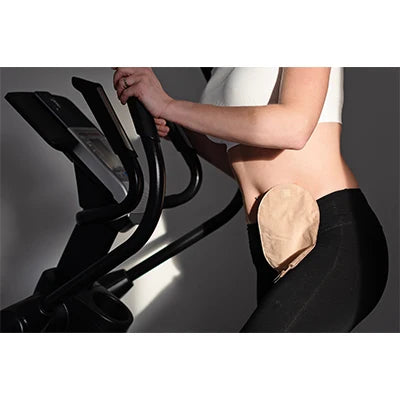
One of the most common concerns after ostomy surgery is whether a normal active life is still possible. The short answer is yes -- emphatically. Ostomates run marathons, compete in triathlons, swim, lift weights, play team sports, and practice yoga. An ostomy does not have to define the limits of your physical life.
What it does require is some thoughtful preparation, the right gear, and an understanding of which activities need modification and which need none at all. This guide covers everything you need to know to get back to the activities you love -- or discover new ones -- with confidence.
When Can You Start Exercising After Ostomy Surgery?
The timeline for returning to physical activity after ostomy surgery depends on the type of surgery, any complications, and your individual healing. General guidance from most surgeons and WOC nurses:
- Walking: Usually encouraged within days of surgery. Gentle walking is actively beneficial for healing -- it reduces the risk of blood clots, improves digestion, and supports mental health during recovery. Start with short, flat walks and gradually increase distance and pace.
- Light activity (stretching, gentle movement): Typically cleared within 2 to 4 weeks, depending on your surgical incision healing.
- Moderate activity (cycling, swimming, light resistance training): Usually cleared at the 6 to 8 week post-surgery mark once the incision is fully healed and your surgeon has given clearance.
- Heavy lifting and high-intensity exercise: Most surgeons recommend waiting 8 to 12 weeks before returning to heavy lifting, intense abdominal exercise, or contact sports. Some recommend longer depending on the extent of surgery and individual healing.
Always get explicit clearance from your surgeon before returning to any exercise beyond gentle walking. Do not interpret "feeling well" as "cleared to exercise" -- internal healing takes longer than surface healing, and pushing too early significantly increases your risk of developing a parastomal hernia.
The Parastomal Hernia Risk: Understanding It Before You Exercise
Parastomal hernia is the most important exercise-related concern for ostomates. As covered in our complete guide to parastomal hernia, up to 50% of ostomates develop one within five years of surgery. Exercise that increases intra-abdominal pressure -- heavy lifting, straining, high-impact activities -- places stress on the weakened abdominal wall around the stoma.
This does not mean avoiding exercise. It means approaching it correctly:
- Always wear a support belt during any exercise that engages the core or involves lifting
- Exhale on the exertion phase of any lift -- never hold your breath and bear down (the Valsalva maneuver dramatically spikes intra-abdominal pressure)
- Build intensity gradually -- don't return to your pre-surgery weights or pace immediately
- Strengthen core muscles progressively and correctly, avoiding exercises that cause the abdomen to dome or bulge
Ostomy Support Belts: Your Most Important Exercise Accessory
A well-fitted ostomy support belt is the single most important piece of equipment for active ostomates. During exercise, the combination of movement, sweat, and increased abdominal pressure can compromise both pouching system security and the integrity of the stoma site. A support belt addresses both concerns simultaneously.
At Best Buy Medical Supplies we carry several belt options suited to different activity levels and needs:
- The Coloplast Brava Ostomy Support Belt is made from a stretchable, breathable fabric with silicone grip that prevents rolling or sliding during movement. It conforms to body contours as you move, making it particularly well suited for dynamic activity. The pouching system can be worn under the belt or through an individualized cut hole in the reinforced panel. Available in small and medium sizes.
- The Nu-Hope Nu-Support Flat Panel Belt provides 360-degree wafer and pouch support with a reinforced plastic ring and adjustable hook-and-loop closure. Available in Cool Comfort elastic for breathability during warmer workouts.
- The Nu-Hope Nu-Form Support Belt offers firmer, contoured support for ostomates who need more substantial abdominal wall reinforcement during heavier activity or who have an existing parastomal hernia.
Put your belt on before getting out of bed each morning and keep it on throughout your workout. Browse the full ostomy support belt collection to find the right fit.
Activity-by-Activity Guide
Walking and Running
Walking is the easiest return-to-exercise activity and one of the best overall for ostomates. It requires no special modifications beyond a support belt for longer distances or faster paces. Running is equally achievable -- many ostomates run half marathons and full marathons. The main practical considerations are:
- Empty your pouch before running -- a full pouch is heavy and can compromise the seal during vigorous movement
- Wear a support belt to stabilize the pouch and protect against hernia risk
- Wear moisture-wicking clothing that holds the pouch against the body without chafing -- compression shorts or running tights work well for this
- Carry a small emergency kit (spare pouch, wipes, adhesive remover) for longer runs
- Stay well hydrated -- ileostomy patients in particular need to monitor hydration carefully during extended exercise in heat
Swimming and Water Sports
Swimming is one of the most frequently asked-about activities for ostomates -- and one of the most achievable. Modern ostomy pouches are waterproof and designed to withstand swimming. The adhesive barrier is water-resistant, though prolonged submersion and chlorine or salt water can affect the outer adhesive tape border over time.
Practical tips for swimming with an ostomy:
- Change to a fresh barrier and pouch before swimming -- a new seal is more secure than one that has been worn for several days
- Add a barrier ring or sealing ring for extra waterproof security at the barrier edge
- Use waterproof tape around the barrier edges for extended water sessions if needed
- Inspect the barrier edge after swimming and dry thoroughly before your next change
- Consider a stoma cap for brief water activities if you have a colostomy and your output is predictable -- stoma caps are designed for short-term use during activities like swimming, providing a flat, discreet profile with a small absorbent pad
- For colostomy patients who irrigate regularly, swimming after irrigation with a stoma cap is a very discreet option
Swimwear designed for ostomates -- with built-in pouching pockets and higher waistbands -- is available from specialist retailers and can provide additional discretion and security. A tight-fitting swimsuit or rash guard also helps hold the pouch flat and reduce drag in the water.
Gym Training and Weightlifting
Resistance training is excellent for ostomates -- it builds the overall core and abdominal strength that supports the stoma site long-term. The key is progressive, correct loading rather than avoiding weights altogether.
- Breathing technique is critical: Exhale on the effort (the lifting phase). Never hold your breath and bear down -- this Valsalva maneuver creates a dramatic, repeated spike in intra-abdominal pressure that is one of the most significant hernia risk factors for ostomates who lift.
- Start lighter than you think you need to and progress gradually, particularly in the first 6 months post-surgery
- Wear your support belt for all compound movements (squats, deadlifts, overhead press, rows)
- Avoid exercises that cause abdominal doming or the appearance of "coning" -- this indicates excessive intra-abdominal pressure that the core isn't managing well. Scale back weight or modify the movement
- Core work: Not all core exercises are created equal for ostomates. Planks, dead bugs, bird dogs, and pallof presses build functional core strength with lower intra-abdominal pressure than traditional crunches, sit-ups, or leg raises. Work with a physiotherapist experienced in post-surgical rehabilitation if you're unsure where to start
- Empty your pouch before heavy training sessions
Cycling
Cycling -- both outdoor and stationary -- is generally well tolerated by ostomates. The main consideration is that a cycling position can press against the pouch, depending on your stoma location. A support belt helps stabilize the pouch during cycling. Padded cycling shorts provide additional comfort. For longer rides, empty before you start and carry supplies for a change if needed.
Yoga and Pilates
Yoga and Pilates are excellent for ostomates -- they build flexibility, core stability, and body awareness that all benefit stoma management. Most positions are achievable and many ostomates find yoga particularly helpful for rebuilding body confidence and mind-body connection after surgery.
Some positions to approach with care initially: deep forward folds that compress the stoma area, inverted poses (headstands, shoulder stands) where the pouch could shift or leak due to gravity, and any position that creates significant intra-abdominal pressure. Work at your own pace and communicate with your instructor if attending a class -- most yoga and Pilates teachers are accommodating once they understand your situation, though you're never obligated to disclose.
Team Sports and Contact Sports
Team sports present the additional consideration of potential contact with the stoma area. A protective stoma guard -- a rigid or semi-rigid shield worn over the stoma under clothing -- provides impact protection. Many ostomates play football, rugby, basketball, hockey, and martial arts with appropriate protection.
A support belt provides some protection and stabilization for lighter contact. For higher-impact activities, discuss with your WOC nurse and surgeon about appropriate protective equipment for your specific sport and stoma location.
Golf, Tennis, and Racquet Sports
These sports involve rotational movement that can stress the stoma site and the pouching seal -- particularly the swing in golf and tennis, which creates a rapid twisting force through the core. A support belt is recommended. Otherwise, these activities are generally well tolerated by ostomates with a well-fitting pouching system. Empty before playing and consider a barrier ring for extra seal security.
Managing Sweat and Heat During Exercise
Sweat is one of the most significant practical challenges during exercise with an ostomy. Moisture between the skin and barrier weakens adhesion, which can lead to leaks mid-workout. Strategies that help:
- Apply your barrier to completely dry skin -- consider using a hairdryer on low to ensure the peristomal area is thoroughly dry before applying, especially in summer or heated gym environments
- Use a skin prep barrier wipe or spray before applying your pouch -- this creates a protective film that enhances adhesion even when the skin becomes sweaty
- Add a barrier ring or sealing ring for extra sweat resistance at the inner edge of the barrier
- Consider extended-wear barriers for exercise days -- formulations like the Hollister Flextend or ConvaTec Durahesive are designed to hold longer in challenging conditions
- Time your exercise around barrier changes when possible -- a fresh barrier applied before a workout is more reliable than one at the end of its wear cycle
- Carry a change kit in your gym bag for any workout lasting more than an hour or in hot conditions
Hydration: Especially Important for Ileostomy Patients
Exercise increases fluid loss through sweat, and for ileostomy patients who are already losing more fluid through their stoma than other ostomates, staying adequately hydrated during exercise is critical. Dehydration can develop faster than it does for people without an ileostomy.
Drink fluids consistently before, during, and after exercise -- not just when you feel thirsty. Sports drinks diluted with water or oral rehydration solutions are better than plain water alone for extended sessions, as they replace the electrolytes lost through both sweat and ileostomy output. Monitor your output and urine color (for urostomy patients) as hydration indicators, and scale back intensity if dehydration signs appear (dizziness, muscle cramps, significantly reduced output).
Practical Kit for Active Ostomates
Having the right supplies for active days makes managing your ostomy during and after exercise straightforward rather than stressful. A well-stocked exercise kit includes:
- A fresh pouch and barrier for a mid-activity change if needed
- Adhesive remover wipes for barrier removal without skin trauma
- Skin prep wipes to restore the peristomal surface for a fresh barrier
- Barrier rings for extra seal security in sweaty conditions
- Pouch deodorant drops for odor management in gym changing rooms
- Zip-lock bags for used pouches
- Your support belt
- For water activities: stoma caps (colostomy) and waterproof tape
Building Confidence: Start Where You Are
Body confidence after ostomy surgery takes time to rebuild, and returning to exercise is part of that process. Many ostomates find that getting back to physical activity -- whatever that looks like for them -- is one of the most significant milestones in reclaiming their sense of self after surgery.
Start with what feels manageable, build gradually, and don't compare your current capacity to your pre-surgery baseline. The goal is progress, not perfection. The UOAA and many ostomy communities host 5k events specifically for ostomates -- a powerful reminder that an ostomy is not a barrier to an active life.
If you're unsure how to start building back to a specific activity, a physiotherapist with experience in post-surgical rehabilitation can be invaluable. Your WOC nurse can also provide guidance on which activities to approach with care and which products are most appropriate for your specific activity level and stoma type.
Shop Related Products
Stock your active kit with everything you need to exercise confidently with an ostomy:
- Ostomy Support Belts -- essential for every workout; Nu-Hope and Coloplast Brava options for different activity levels
- Coloplast Brava Ostomy Support Belt -- stretchable, breathable, silicone grip that moves with your body during exercise
- Nu-Hope Nu-Support Flat Panel Belt -- 360-degree wafer and pouch support with Cool Comfort elastic
- Nu-Hope Nu-Form Support Belt -- firmer contoured support for heavier activity or hernia management
- Stoma Caps -- discreet short-term coverage for swimming and water activities
- Barrier Rings and Sealing Rings -- extra sweat and water resistance at the barrier edge
- Skin Prep Barrier Wipes -- enhance adhesion before active days
- Adhesive Remover Wipes -- gentle barrier removal after exercise
- Pouch Deodorant Drops -- odor control in gym changing rooms and on the go
- Mini Pouches -- low-profile option for lower-impact activity days
- Browse the Full Ostomy Supplies Collection
Disclaimer: This information is intended for educational purposes only and should not replace advice from your healthcare provider, surgeon, or WOC nurse. Always get explicit clearance from your surgeon before returning to exercise after ostomy surgery. If you experience pain, increased output, a new bulge around the stoma, or any concerning symptoms during or after exercise, stop the activity and contact your healthcare provider.
Just getting started with ostomy life? Begin with our answers to the top 10 ostomy questions.