
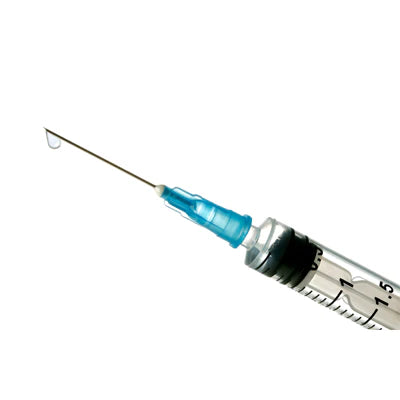
Standing in front of a wall of insulin syringes at the pharmacy can be overwhelming. Should you choose 28 gauge or 31 gauge? What is the difference between a 0.3 mL and 1 mL barrel? Does needle length really matter? For the millions of people with diabetes who rely on insulin injections, selecting the right syringe is not just about comfort�it is about ensuring accurate dosing, minimizing injection pain, and maintaining consistent diabetes management. This comprehensive guide will walk you through everything you need to know to make an informed decision about your insulin syringes.
According to the American Diabetes Association, approximately 8.4 million Americans use insulin to manage their diabetes. Each of these individuals faces the important task of selecting injection equipment that matches their specific insulin dosage requirements, body type, and personal comfort preferences. With various syringe sizes, needle gauges, and barrel capacities available, understanding the options ensures you get the most effective and comfortable insulin delivery system for your needs.
Understanding Insulin Syringe Components
Before diving into selection criteria, it is essential to understand the three main components that differentiate insulin syringes: barrel capacity, needle gauge, and needle length. Each of these factors plays a distinct role in how effectively and comfortably you can administer your insulin doses.
Barrel Capacity refers to how much insulin the syringe can hold, measured in milliliters (mL) or cubic centimeters (cc). Standard insulin is formulated as U-100, meaning there are 100 units of insulin per milliliter. Therefore, a 1 mL syringe holds 100 units of insulin, a 0.5 mL syringe holds 50 units, and a 0.3 mL syringe holds 30 units.
Needle Gauge indicates the thickness of the needle. Counterintuitively, higher gauge numbers mean thinner needles. For example, a 31-gauge needle is thinner than a 28-gauge needle. Thinner needles typically cause less discomfort during injection but may take slightly longer to deliver insulin compared to thicker needles.
Needle Length measures how long the needle is, typically ranging from 5/16 inch (8mm) to 1/2 inch (12.7mm) for insulin syringes. The appropriate length depends on your body type, injection technique, and the injection site you use. Shorter needles are often sufficient for most adults and are particularly appropriate for children or individuals with less subcutaneous fat.
Choosing the Right Barrel Capacity
Selecting the appropriate barrel size is primarily determined by your typical insulin dose. Using a syringe that closely matches your dose provides several advantages, including easier measurement accuracy and reduced risk of dosing errors.
0.3 mL (30 Unit) Syringes
The smallest standard insulin syringe holds up to 30 units of insulin. These syringes feature measurement markings in 1-unit increments, making them ideal for precise dosing of small amounts. Healthcare providers typically recommend 0.3 mL syringes for patients who take 30 units or less per injection.
The primary advantage of 30-unit syringes is measurement precision. With fewer total units in the barrel, the spacing between unit markings is larger, making it easier to see exactly how much insulin you are drawing. This is particularly beneficial for individuals with visual impairments, elderly patients, or those who require very precise small doses such as pediatric patients.
If you regularly use 30 units or less of insulin per injection, consider the TruePlus 31G 5/16 inch 0.3mL insulin syringes. The combination of small barrel size and thin needle provides maximum comfort while maintaining dosing accuracy.
0.5 mL (50 Unit) Syringes
Medium-capacity syringes hold up to 50 units and typically feature measurement markings in 1-unit increments. These syringes represent the middle ground, suitable for patients whose insulin doses range from 30 to 50 units per injection.
The 0.5 mL barrel size offers a good balance between measurement precision and capacity. While the unit markings are slightly closer together than on 0.3 mL syringes, they remain easy to read for most users. This size is particularly popular among Type 2 diabetes patients who require moderate insulin doses.
For doses in this range, the TruePlus 31G 5/16 inch 0.5mL syringes provide comfortable injections with clear measurement markings. The thin 31-gauge needle maintains comfort while the half-milliliter barrel accommodates moderate doses accurately.
1 mL (100 Unit) Syringes
The largest standard insulin syringe holds up to 100 units of insulin. These syringes typically feature measurement markings in 2-unit increments, though some premium models offer 1-unit markings throughout. Healthcare providers recommend 1 mL syringes for patients who regularly take more than 50 units per injection.
While 100-unit syringes accommodate larger doses, the trade-off is slightly reduced measurement precision due to closer unit markings. However, for patients requiring high insulin doses, this is the most practical option. Attempting to split a large dose between multiple smaller syringes increases injection frequency and the potential for dosing errors.
If your insulin regimen requires doses between 50 and 100 units, the TruePlus 31G 5/16 inch 1mL syringes provide efficient delivery with ultra-fine needles for improved comfort despite the larger volume.
Needle Gauge: Finding Your Comfort Level
Needle gauge significantly impacts injection comfort. Understanding the options helps you balance comfort with practical considerations like insulin flow rate and ease of use.
28 Gauge Needles
The thickest needles commonly used for insulin injection, 28-gauge needles deliver insulin quickly and work well for individuals who need to inject larger volumes. While these needles are slightly less comfortable than thinner options, the difference in sensation is minimal for most users.
Healthcare providers sometimes recommend 28-gauge needles for patients with thicker skin, those who have developed injection site scar tissue from years of injections, or individuals who prefer faster insulin delivery. The durability of slightly thicker needles also means they are less likely to bend during injection, which can be important for patients with limited dexterity or hand strength.
The BD Micro-Fine 28G 1/2 inch syringes represent an excellent choice for patients who benefit from slightly thicker needles while still maintaining reasonable injection comfort.
29 and 30 Gauge Needles
Mid-range needle gauges offer a balance between comfort and functionality. These gauges deliver insulin efficiently while providing improved comfort compared to 28-gauge options. Many healthcare providers consider 29 or 30-gauge needles the optimal choice for adult patients using standard insulin doses.
The 30-gauge needle in particular has become extremely popular due to its combination of thin profile for comfort and adequate flow rate for typical doses. Many patients report that 30-gauge needles provide sufficient comfort that injection anxiety decreases significantly.
For reliable mid-gauge performance, the BD Ultra-Fine 30G 1/2 inch syringes deliver consistent results with a well-established reputation for quality and comfort.
31 Gauge Needles
The thinnest needles commonly available for insulin injection, 31-gauge needles provide maximum comfort with minimal injection sensation. These ultra-fine needles are particularly beneficial for children, individuals with injection anxiety, or anyone who finds injections particularly uncomfortable.
The main consideration with 31-gauge needles is that insulin flows slightly slower compared to thicker needles. For small to moderate doses, this difference is negligible. However, patients who inject large volumes may find thicker needles more practical for faster delivery.
Many manufacturers design their ultra-fine 31-gauge needles with special coatings and engineering to ensure smooth penetration despite the thin diameter. The Advocate 31G 5/16 inch insulin syringes exemplify this approach, offering exceptional comfort for patients who prioritize minimal injection sensation.
Needle Length: Matching Your Body Type
Selecting appropriate needle length ensures insulin reaches the subcutaneous fat layer where it is absorbed most effectively. Using needles that are too short may result in insulin depositing in the dermis (skin layer), while needles that are too long could reach muscle tissue. Both scenarios can affect insulin absorption rates and diabetes control.
Short Needles: 5/16 Inch (8mm)
Short needles work well for most adults and are particularly appropriate for children, lean individuals, or anyone injecting into areas with less subcutaneous fat. Research in diabetes care has shown that shorter needles are just as effective as longer needles for most patients when using proper injection technique.
The 5/16 inch length minimizes the risk of intramuscular injection, which is particularly important because insulin absorbed from muscle tissue acts faster than expected, potentially causing unexpected low blood sugar. For this reason, many diabetes educators now recommend short needles as the standard choice unless specific circumstances require longer options.
When using short needles, you typically do not need to pinch the skin before injection (though some healthcare providers still recommend this technique for very lean individuals). This makes injections simpler and faster, particularly for people with limited dexterity or those who inject multiple times daily. Browse our complete selection of diabetic supplies to find short-needle options that match your needs.
Standard Needles: 1/2 Inch (12.7mm)
Half-inch needles have historically been the standard length for insulin syringes. While research now shows that shorter needles work effectively for most patients, 1/2 inch options remain popular and appropriate for many individuals, particularly those with higher body weight or injection sites with thicker subcutaneous fat layers.
When using 1/2 inch needles, proper injection technique becomes more important. Most healthcare providers recommend pinching the skin and injecting at a 90-degree angle to ensure insulin deposits in the subcutaneous tissue rather than reaching muscle. Some patients may need to inject at a 45-degree angle depending on their body composition.
Half-inch needles may be preferable for individuals who have been using this length successfully and feel comfortable with their technique. There is no medical requirement to switch to shorter needles if your current regimen provides good diabetes control and you experience no discomfort or complications.
Special Considerations for Specific Patient Groups
Different patient populations have unique needs that influence optimal syringe selection.
Pediatric Patients
Children typically benefit from the smallest, thinnest needle available�usually 31-gauge needles with 5/16 inch length and 0.3 mL barrel capacity. The reduced discomfort helps minimize injection anxiety and resistance, making diabetes management more cooperative for both child and caregiver.
Measurement precision is also crucial for pediatric doses, as children generally require smaller, more precise insulin amounts. The larger unit markings on 0.3 mL syringes help prevent dosing errors, which is particularly important given that dosing mistakes have proportionally larger effects in smaller bodies.
Elderly Patients
Older adults often benefit from syringes with larger, easier-to-read measurement markings. The 0.3 mL and 0.5 mL barrel sizes provide clearer unit markings that accommodate vision changes common with aging. Additionally, syringes with larger, easier-to-grip barrels can help patients with arthritis or reduced hand strength.
Some elderly patients may also have thinner skin due to natural aging processes or long-term steroid use. In these cases, shorter needles reduce the risk of intramuscular injection and associated discomfort or unexpected insulin action.
Patients with Visual Impairments
For individuals with reduced vision, several adaptations can improve syringe usability. Selecting syringes with the largest possible unit markings�typically 0.3 mL barrels for small doses or 0.5 mL barrels for moderate doses�makes measurement more accurate.
Some patients benefit from using magnifying devices designed for syringe measurement or pre-filling syringes with assistance from a family member or home health aide. However, pre-filling should only be done if syringes can be stored properly and used within the appropriate timeframe recommended by your healthcare provider.
Patients Requiring High Insulin Doses
Individuals who take more than 50 units per injection need 1 mL barrel syringes to accommodate their full dose in a single injection. While splitting large doses into multiple injections using smaller syringes is possible, this approach increases the number of injection sites needed and the time required for diabetes management.
For high-dose patients, slightly thicker needles (28 or 29 gauge) may provide more practical insulin delivery. The modest increase in needle thickness is usually not significantly less comfortable, while the improved flow rate makes injections faster and more convenient.
Pen Needles: An Alternative to Traditional Syringes
While this guide focuses primarily on traditional insulin syringes, many patients now use insulin pens with disposable pen needles. Pen needles share many characteristics with syringe needles, including gauge and length options, but attach to prefilled or reusable insulin pens rather than requiring manual insulin drawing.
Pen needles offer convenience advantages including preset dosing dials, portability, and elimination of the need to draw insulin from vials. However, they also typically cost more than traditional syringes and require compatible insulin pen devices.
If you use an insulin pen, consider the Droplet 32G 4mm pen needles for maximum comfort with ultra-short, ultra-thin design. For those who prefer slightly longer needles, the Droplet 31G 5mm pen needles provide an excellent balance of comfort and reliable subcutaneous delivery. The Droplet 31G 8mm pen needles offer a longer option for patients who require additional needle length based on their body composition.
Injection Technique: Maximizing Comfort and Effectiveness
Even with the perfect syringe, proper injection technique ensures optimal insulin delivery and comfort.
Site Rotation
Repeatedly injecting in the same spot can cause lipohypertrophy�lumpy areas of fat buildup that impair insulin absorption. Rotate injection sites systematically, dividing each injection area (abdomen, thighs, buttocks, upper arms) into quadrants and using different spots within each area.
Most healthcare providers recommend keeping a simple log of injection sites for the first few weeks until rotation becomes habitual. Proper rotation not only prevents tissue damage but also ensures consistent insulin absorption, leading to more predictable blood sugar control.
Proper Angle and Depth
When using short needles (5/16 inch), most patients can inject at a 90-degree angle directly into the skin without pinching. With longer needles (1/2 inch), pinching the skin and possibly using a 45-degree angle helps ensure subcutaneous rather than intramuscular delivery.
Your healthcare provider or diabetes educator can assess your body composition and recommend the most appropriate injection angle for your specific situation. Do not hesitate to ask for a demonstration or review of proper technique during medical appointments.
Storage and Handling
Store insulin syringes in their original packaging in a clean, dry location at room temperature. Do not refrigerate syringes, as this does not improve sterility and may make injections more uncomfortable. Always use a new, sterile syringe for each injection to minimize infection risk and ensure needle sharpness for comfortable injections.
When to Consult Your Healthcare Provider
While this guide provides general information about insulin syringe selection, certain situations require professional medical guidance. Consult your healthcare provider or diabetes educator if you experience any of the following:
Persistent pain or discomfort during injections may indicate incorrect needle length, injection technique problems, or the need to try different injection sites. Your healthcare team can assess your technique and recommend adjustments.
Unexplained blood sugar fluctuations might relate to inconsistent insulin absorption due to injection technique issues, inappropriate needle length causing intramuscular injections, or lipohypertrophy from inadequate site rotation.
Difficulty drawing insulin accurately could mean you need a different barrel size with easier-to-read measurements, or you might benefit from devices designed to assist with insulin measurement.
Bruising or bleeding at injection sites sometimes indicates that needles are too long for your body type, you are hitting small blood vessels, or you need to adjust your injection technique.
Cost Considerations and Insurance Coverage
Insulin syringes are typically covered by health insurance, including Medicare and Medicaid, when prescribed by a healthcare provider. However, coverage specifics vary by plan, including which brands and sizes are covered and whether there are quantity limits per month.
Many patients find that purchasing insulin syringes in larger quantities (such as boxes of 100) through online medical supply retailers offers significant cost savings compared to small-quantity pharmacy purchases. This is particularly true for patients without insurance coverage or those with high deductibles.
When comparing prices, calculate the per-syringe cost rather than just looking at box prices, as different suppliers package syringes in varying quantities. Additionally, consider whether you can use FSA or HSA funds to purchase insulin syringes, as these accounts allow you to pay with pre-tax dollars, providing additional savings. Learn more about using your HSA and FSA funds for medical supply purchases.
Transitioning to a New Syringe Type
If you decide to change syringe specifications based on this guide, make the transition thoughtfully. When switching to a different barrel size, needle gauge, or length, pay extra attention to your blood sugar monitoring for the first week or two. While most transitions have no impact on diabetes control, occasionally adjustments in insulin absorption or measurement accuracy can affect blood sugar patterns.
Inform your healthcare provider about syringe changes at your next appointment. This information helps them interpret any blood sugar pattern changes and ensures your medical records accurately reflect your current diabetes management tools.
Conclusion: Making an Informed Choice
Selecting the right insulin syringe involves balancing several factors including your typical insulin dose, comfort preferences, body type, dexterity, and vision. By understanding barrel capacity, needle gauge, and needle length options, you can make an informed decision that optimizes both diabetes management effectiveness and injection comfort.
Remember that the best insulin syringe is the one that matches your specific needs and circumstances. What works perfectly for another person might not be ideal for you, and that is perfectly normal. The time invested in finding your optimal syringe setup pays dividends through improved comfort, better dosing accuracy, and reduced injection anxiety.
For most patients taking 30 units or less per injection, 31-gauge 5/16 inch syringes with 0.3 mL capacity offer excellent precision and comfort. Those using 30-50 units typically find 31-gauge 5/16 inch syringes with 0.5 mL barrels provide a good balance. Patients requiring 50-100 units per injection generally need 31-gauge syringes with 1 mL capacity for practical delivery of larger volumes.
Do not hesitate to discuss syringe selection with your healthcare provider or diabetes educator. These professionals can assess your individual situation and provide personalized recommendations. With the right insulin syringe matched to your needs, insulin injections become a more comfortable, routine part of effective diabetes management.
Browse our complete diabetic supplies collection to find the insulin syringes, pen needles, and diabetes management accessories that match your specific requirements.
Medical Disclaimer: This content is for informational purposes only and does not substitute professional medical advice, diagnosis, or treatment. Always consult your healthcare provider or diabetes educator regarding insulin injection technique, syringe selection, and diabetes management. Insulin dosing and delivery method decisions should be made in consultation with your medical team. Never change your insulin regimen or injection equipment without professional guidance.